What Size Should an MTG Cube Be? 180 vs 360 vs 450 vs 540+
Quick Recommendation
If you’re unsure, start with a 360-card cube. It supports the standard 8-player draft, keeps the environment focused, and lets every card appear in each draft.
New to cube entirely? Start with What Is an MTG Cube? first.
Use a 180-card Twobert if you mostly play with 2–4 people. Consider 450 cards for 10 players or you draft often. Go higher to 540 cards for 12 players or your group drafts a lot for more variety.
Avoid 720 cards unless you have a specific reason
Two separate 360-card cubes are easier to manage and provide the same ability of playing with 16 players at the same time
| Group Size | Cube Size | Primary Benefit | Primary Challenge |
|---|---|---|---|
| 2 to 4 | 180 | Twobert; quick portable games | Hard to make drafts compelling |
| 5 to 8 | 360 | Strong consistent identity | Lower replayability and variance |
| 8 to 10 | 450 | Slight variance if you draft often* | When the 11th player shows up |
| 8 to 12 | 540 | Good variance if you draft A LOT** | Balancing is difficult |
| 12 to 16 | 2x 360 | Supports two 8-player drafts at once | More upkeep but easier than 720 card |
What Does Cube Size Impact?
A cube’s size is a foundational choice that dictates the number of players it supports but also impacts cost, portability, variance, replayability, and the identity and feel of the format. Understanding the trade-offs is the first step for any designer looking to create a specific, intentional cube experience.
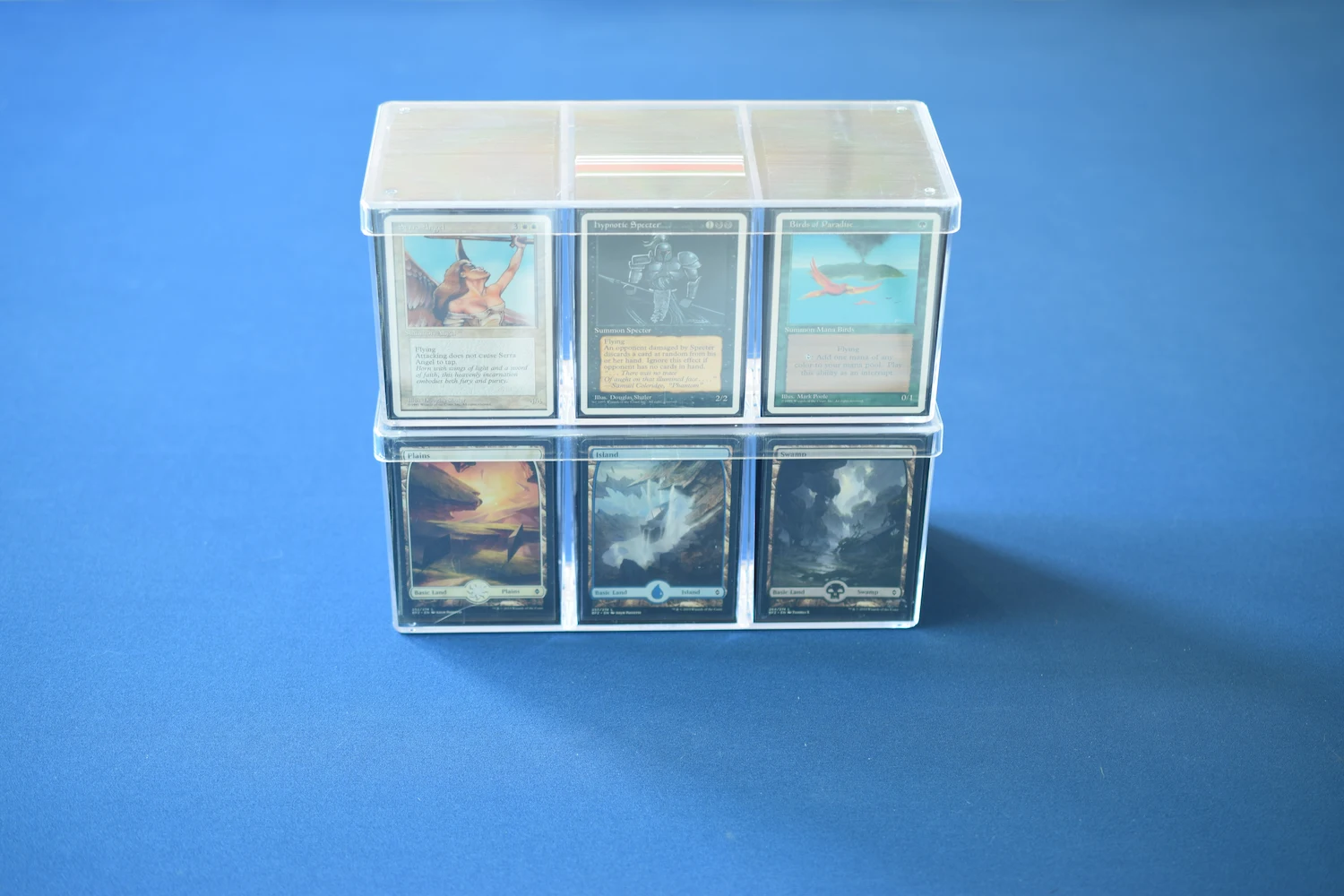
Most importantly cube size dictates the number of players it can support. So you should decide your cube size based on expected playgroup size, BUT that’s not the only thing cube size impacts:
- Cost: Larger cubes mean more money spent on cards, sleeves, and require larger storage solutions and basic lands.
- Logistics: Smaller cubes are easier to carry around physically, and faster to shuffle, sleeve, play-test and update.
- Flexibility: Sealed requires twice as many cards as draft, so a 360-card cube can support an 8-player draft or just a 4-player sealed event.
- Archetype Support: Unseen cards during a draft can put certain archetypes at risk of being unplayable if payoffs aren’t opened and required to make a deck work (storm for instance).
- Replayability: 100% of cards seen every draft will start to feel the same after just a couple drafts, this might be a feature for cubes that aren’t drafted often where you want that exact feel every time.
- Identity: Larger cubes are harder to establish the identity of the different deck archetypes and the cube overall than smaller cubes, and require more drafts to playtest changes.
Why 360 Cards?
The 360-card cube is the traditional starting point because the math works out easily for an 8-player draft pod. It creates a consistent environment where every single card will be seen during the draft by someone, making it easy to design a specific and consistent cube experience.
Cube Minimum Size Math
- Draft cube size = players × 45 cards
- Sealed cube size = players × 90 cards
The standard Magic The Gathering draft gives each player 3 packs of 15 cards for a total of 45 cards in each player’s pool (3 * 15) to build their deck. So to determine the minimum cube size, just multiply the number of players by 45. So 8 players * 45 cards = 360. (For sealed, use pools of 90 cards for each player). The minimum size means that every single card in the cube is seen by at least 1 player every time the cube is drafted. This fact can either be a feature or a drawback of your cube, it all depends on what your goals are. For a cube that is drafted infrequently, guaranteeing the “full experience” every time is a huge plus. However, if your group drafts the same 360 cards a lot, the cube may start to feel “solved” or stale quickly.
276 unique cards are seen by each player during an 8-player 15-card pack draft
15+14+13+12+11+10+9+8=92 unique cards per pack * 3 packs
It’s also important to remember, that even though you get twice the number of cards in your pool for sealed versus draft, draft decks are usually much stronger than sealed decks from the same cube. Building a deck with 90 random cards usually isn’t as good as building a deck with 45 specifically chosen cards from the 276 unique cards! that a player sees during a typical draft. Here’s the math: 15+14+13+12+11+10+9+8=**92 unique cards** seen per round * 3 rounds => 276 unique cards seen. (Picks after the 8th pack will be cards you’ve seen before)
Why 3 Packs of 15?
Traditional booster packs used for draft contained 15 cards so that was the starting point. For a cube draft with 8 drafters, this configuration strikes a great balance between number of first picks, the ability to look at packs on subsequent picks to read draft signals, and times seeing the same pack more than once (Also called Wheeling). These variables influence the ability to see and read draft signals and the strength of those signals as well as the luck aspect and potential power concentration that can result from first picks.
For a standard 8-player draft with 3 packs of 15 cards, you’ll usually see the pack that you open twice: once with all 15 cards, and again when it comes back with 7 cards remaining. (You’ll actually see 7 of the 8 packs opened during a typical draft twice while the final 8th pack you’ll only see once) This is what allows some of the skill of drafting to manifest beyond just card power evaluation. By taking note of what’s in each pack when you see it the first time vs what’s still there when you see it the second time, you can determine what archetypes are not currently being drafted by other players and decide to potentially pivot your picks towards that archetype.
- Use the standard
3 x 15 = 45setup as your starting baseline when experimenting with pack count and cards per pack. - For 4 drafters, try 5 packs of 9 cards. You’ll still get 45 cards in your pool and strikes a good balance of first picks to pack wheels.
Downstream Effects Of Changes
Changing the draft pool size, the number of packs and or cards per pack can have downstream effects which can be helpful to understand if you’re looking for that particular experience.
- Larger draft pool
- Longer amount of time needed to build decks
- Trends toward higher power level of decks
- Ample room for combos and speculative picks to be drafted
- Tends to leave cards consistently in sideboards that aren’t at the same power level of the default archetype decks
- Smaller draft pool
- Fewer cuts to make
- Trends toward lower power level midrange decks that are just hoping to curve out
- Less room for combo and speculative picks to be drafted
- Can result in having to play more lands or off-color picks to have a functional deck
- More packs with fewer cards
- More first picks which can increase the luck aspect of draft at the cost of skill
- Fewer packs (if any) you see multiple times which removes some of the opportunity to leverage the draft skill of reading signals
- Fewer packs with more cards
- More chances to read signals but muddles the signal as it increases the likelihood of two scenarios:
- Having a pack that contains ALL the cards you want for your deck so you choose 1 and the next player still sees 3 great cards for that archetype and thinks it’s still open
- Having a pack that contains NO cards you want from it making your choice just “hating” out a card from the pack
- More chances to read signals but muddles the signal as it increases the likelihood of two scenarios:
Minimum Size vs. Oversized Cube
A minimum-size cube gives you consistency and an oversized cube gives you variety and replayability.
Neither is automatically better. Seeing every card during every draft is great for consistency and a strong cube identity, but can feel stale quickly especially if your group drafts the same cube a lot. A larger cube leaves some cards out each draft, which makes the cube feel fresher as you’re always seeing slightly different cards but it becomes harder to balance and establish the cube’s identity.
| Minimum Cube Size | Oversized Cube |
|---|---|
| Cheaper to build and maintain | More expensive to build and maintain |
| More consistent per draft | More variety per draft |
| All card feedback every draft | Card feedback can take multiple drafts |
| Gets stale faster | Archetype support requires multiples |
Larger cubes also support more drafters of 10, even 12 drafters, but I’d advise against going higher than 12 player support for most cube environments. 720 cards can support 16 players to participate in two 8 person draft pods simultaneously but different draft pods shouldn’t play against each other if your group values fair competition. So while you could spend the time and effort to maintain and curate a 720-card cube, you could probably more easily use two completely separate and different 360-card cubes for each pod and have the same if not better experience. If the goal of your cube is less about keeping draft fair and competitive and you just want to play magic with your friends, then restricting cross pod matches may not be as important. It’s your cube so make and play it how you want.
What’s a Twobert?
The 180-card TWO Person cuBE-RT. This small cube is ideal for small groups and fast games.
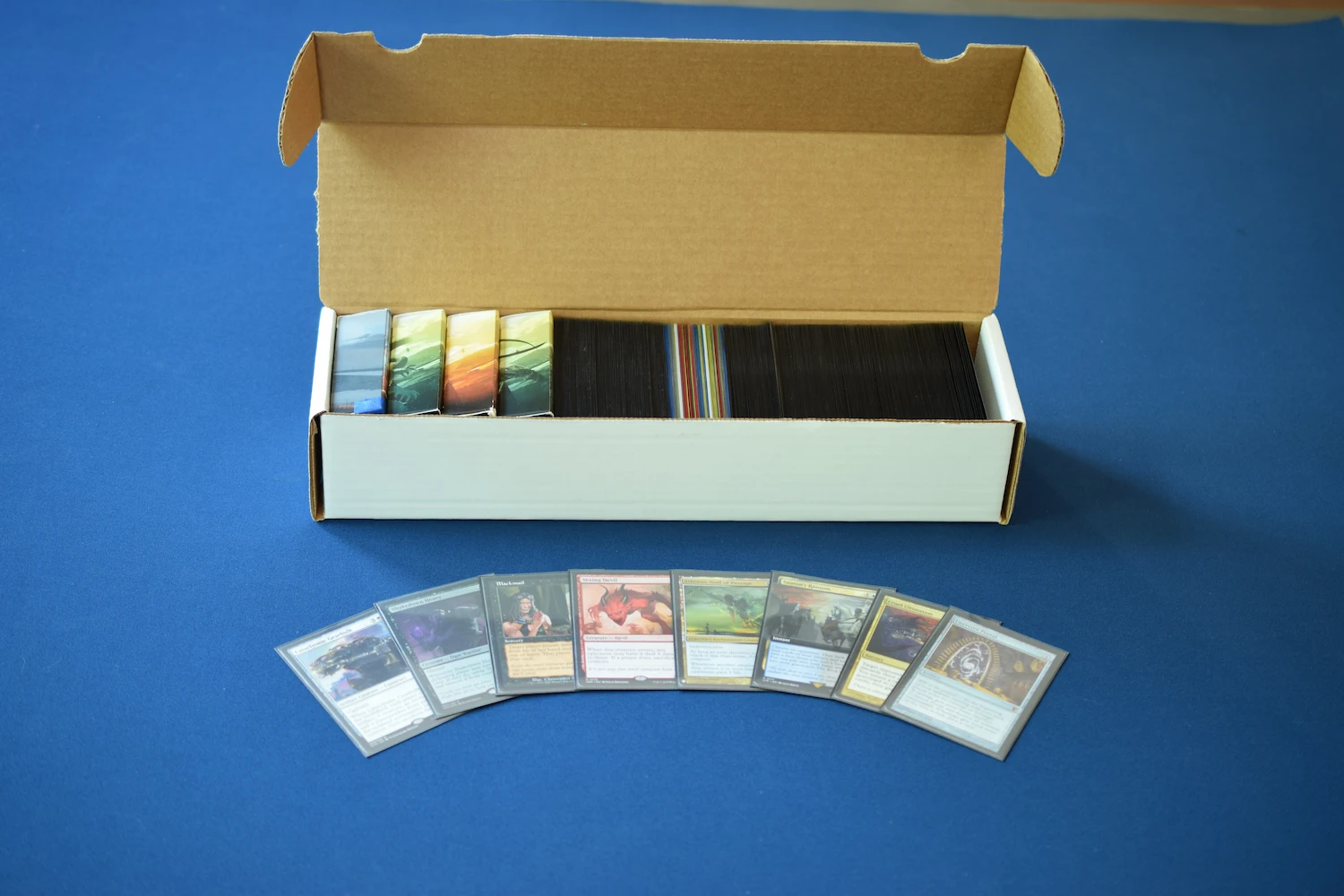
While large cubes cater to bigger groups and expansive card pools, Twoberts offer a tailored experience for fast games between 2 to 4 players. They are easy to bring to a game store and have a quick grid-draft, deck build, and game all in 30 minutes between rounds.
Twoberts are harder to design than they might first appear. Fewer drafters means fewer contested picks which can lead to players drafting on their own respective “rails” or decks from the get go. When players aren’t overlapping at all during the draft and there’s no decisions to make, you might as well split your 180-card Twobert into 4 preconstructed decks and battle them against each other skipping the draft altogether.
It is also easy to fall into the trap of every card being able to fit into the same two 180-card cohesive deck. This makes each decision during the draft and deck-building not that meaningful, yet also difficult at the same time as every card needs to be evaluated rather than just a few that would reasonably slot into your deck. This is especially true in mono-colored cubes and makes defining archetypes much more difficult and important.
So What Size Is Best?
The best starting point is a 360-card cube for 5 to 8 players. It supports a full 8-player draft, keeps the environment focused, and there are lots of great lists online that have been tested and vetted a bunch.
- If your group size is only 2-4, go with a 180-card Twobert.
- If your group size is 9 to 12, consider 450 or 540 card cubes.
- If your group wants to draft the same cube over and over, consider an oversized cube.
Ultimately, finding the right Magic The Gathering Cube size is down to preferences and understanding the downstream impact of cube size will help you choose the right size for your needs.