Why "Worse" Cards Can Improve MTG Cubes
Why “Strictly Better” Isn’t Always Better
Cube design is more than just grabbing a collection of great cards. It’s about building an environment players enjoy, where draft picks, deck-building choices, and gameplay decisions actually matter.
Strictly Better
- A card that does the same thing as another card but better: lower cost, better timing, more flexibility, etc. Like Murder vs Hero’s Downfall.
- (Even when there are small niche examples where the strictly better card would actually be worse, we still use the term. Like where Asphyxiate can kill Emrakul, the Promised End but Murder can’t.)
When building a Cube, exclusively choosing strictly better versions of effects is a common mistake that can lead to a cube that has no identity of its own. The more interesting cards that can give the cube a fun unique feeling end up being forced out because they pale in comparison to the rest of the cube environment. You end up with a cube that just feels like another vintage cube which is fine if that’s what you’re going for, but it’s not if you’re not.
In constructed Magic, players rightfully seek the most efficient value producing cards to gain a competitive edge. But in Cube design where you are the architect of the entire format, outside of the high powered vintage cubes a rigid adherence to raw power can be a detriment. When every threat is a must-answer value engine, games can spiral and end too quickly and feel more like a coin flip than a test of player agency. Variance will always play a role in games of Magic, but it’s good to mitigate those instances and curate a cube that presents the opportunity to make interesting decisions during the draft, while deck-building, and during gameplay.
Drawbacks are one way, but they aren’t the only way
While drawbacks can be a good way to add draft signals and create more interesting and fun gameplay, they are far from the only way to achieve this which we’ll cover in depth in future posts.
Drawbacks Inform Decisions
Cards with drawbacks provide context to create more meaningful decisions for players to evaluate context, synergy, and strategy instead of just raw power. Instead of just asking “is this card good?” they’ll ask, “how can I make this good?” and be rewarded for their creativity.
Signals During The Draft
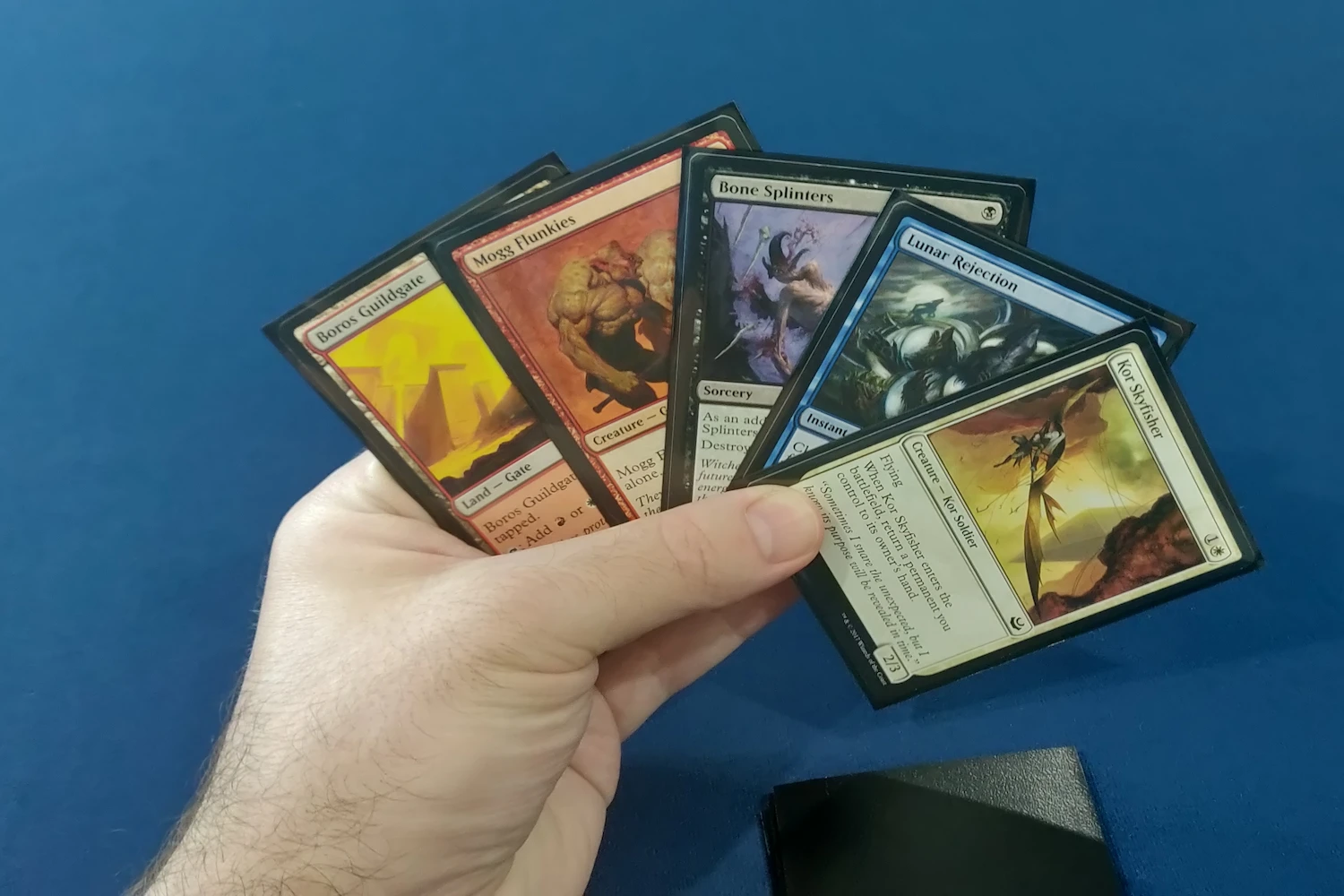
A card’s drawback can be a powerful signal that points drafters toward a specific archetype. A powerful creature that can’t block is a signal it belongs in an aggressive deck. A spell that requires you to discard a card can signal that a reanimator archetype exists. A card that requires you to return something you control back to your hand would slow down an aggressive deck, but an ETB deck could benefit from this.
Cards that have drawbacks for most decks but are actually benefits in the right deck are great inclusions for your cube. Rewarding players that pay attention to those drawbacks and lean into them will make for better decks, drafts, and cubing. Players will be able to understand the whole cube environment you’ve created from information gathered on just the cards they’ve seen so far.
Don’t Include False Signals
A false signal is anything that is printed on a card that looks relevant to a person seeing just that card but is actually irrelevant, or when a card is part of a known combo but the other half is absent in the rest of the cube:
- Wizard’s Lightning in a cube with few or zero wizards
- Just one half of the Pestermite, Deceiver Exarch, and Splinter Twin combo
- Inkwell Leviathan in a cube without Tinker
- Gifts Ungiven in a cube without Unburial Rites
Better Deck-Building
Cards that are great in the right deck but underwhelming without the proper support can help streamline the deck-building process for some. For others, it can create some nice tension when deciding if you’ll be able to overcome that downside enough to make the card work in your deck or not.
Interesting Gameplay
During gameplay, drawbacks can create more novel situations and memorable moments. A player might have to navigate a difficult turn playing a card with a significant downside than they otherwise would. This leads to more dynamic and interactive games than those dominated by generically powerful cards that offer simple, obvious lines of play with only upsides.
Drawbacks Can Balance Archetypes
Cards with drawbacks can help to tamp down or lower the power level of certain decks thus giving other decks more of a chance against them.
- Higher mana costed cards to delay certain decks like Dark Banishing instead of Doom Blade
- Shock and tap lands over better fast mana for certain colors like Sacred Foundry or Sacred Peaks instead of Plateau and Inspiring Vantage
- Non-perfect answers that leave something behind like Swan Song or that ramp the opponent like Path to Exile
These can allow lower tier cards and strategies to be viable in your cube that are normally outclassed by better options.
Counterspell Vs. Familiar’s Ruse
Most of the time, Counterspell is a better card than Familiar's Ruse. But for your cube, the drawback of having to have a creature on the board to cast likely makes for a better experience.
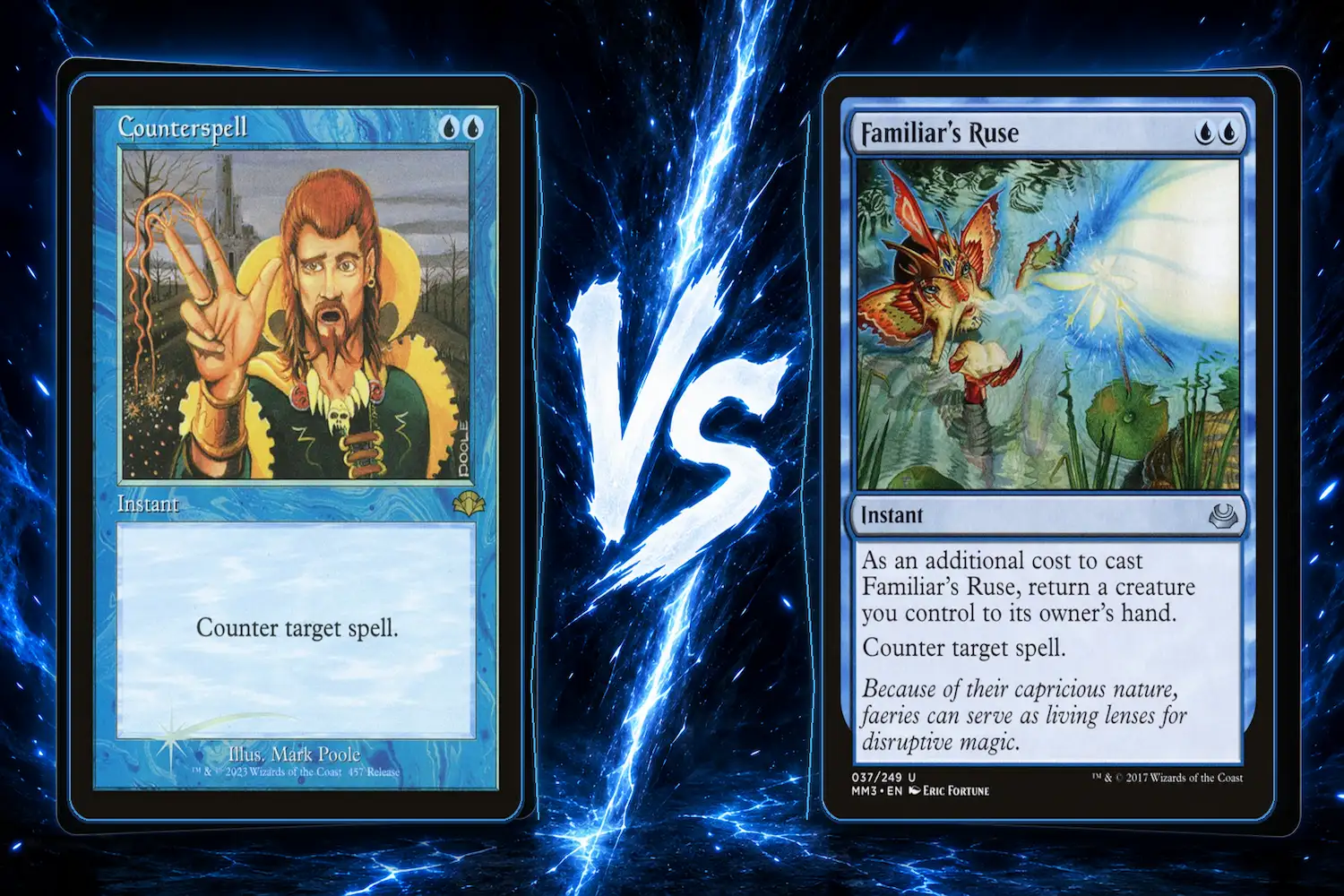
In a vacuum, Counterspell is strictly better than Familiar's Ruse countering a spell for two blue mana with no additional cost. It’s almost an auto-include for any blue deck. Familiar's Ruse also costs two blue mana, but it has a drawback: “as an additional cost to cast this spell, return a creature you control to its owner's hand.“ So why would a cube designer choose the “worse” card? It creates a strong signal for an enters-the-battlefield (ETB) strategy. It creates tension for decks that need access to countermagic, but will have a more difficult time having a creature on board. These two things encourage card synergy during draft, more complex deck-building decisions, and different gameplay lines. Whereas Counterspell is just a generically powerful card that fits into any blue deck without promoting any specific themes.
| Feature | Counterspell | Familiar's Ruse |
|---|---|---|
| Draft Signal | Signals that blue might be open. | Signals an “enters-the-battlefield” (ETB) theme is present. |
| Deck-Building | An easy inclusion in any blue deck. | Requires a critical mass of creatures with valuable ETB effects. |
| Gameplay Pattern | Draw go control, tempo strategy, combo protection | Value enabler, like reusing a Snapcaster Mage. |
| Design Impact | Increases the answers blue has access to. | Fosters a specific, synergy-based archetype. |
By choosing Familiar's Ruse, you send a clear message. You’re telling drafters that a blue deck in your cube will want to reuse powerful ETB effects. A player then might prioritize drafting creatures like Mulldrifter or Aether Channeler. They will figure out the drawback can be an upside. This offers a level of strategic depth that Counterspell does not.
This doesn’t mean you should always pick Familiar's Ruse over Counterspell or that you can’t run both, it depends on the rest of your cube and what your goals are. Consider it if you want to boost the ETB deck and want to hinder draw-go control. For a cube that wants traditional aggro vs. control, this may be the wrong swap.
Not Every Drawback Is Good
So you shouldn’t just ignore cards that don’t have drawbacks, or think that every card with a drawback is secretly great for your cube. Like most things in cube design, when to include cards with drawbacks is a delicate balancing act to ensure the card is having the impact you’re aiming for.
It’s an ongoing process of finding the right balance of payoffs and enablers for your deck archetypes, contested picks that fit into multiple decks like removal and mana fixing, and everything else that goes into creating a great cube.
- You want to be sure the drawback isn’t too severe that it’s killing a deck archetype from being viable in your cube.
- You also want to be sure the card isn’t so narrowly tailored that just one specific deck archetype will actually play the card. (We’re talking about cards outside of your signpost and payoff cards which might only fit into a single deck.)
Signpost Cards
Cards that create or require a certain play pattern such that they “signal” to players during the draft “this deck archetype exists in the cube”, and you’ll be paid off for building around it, like Entomb is a signpost for the reanimator archetype. (This is a term coined by MTG set designer Mark Rosewater for the default inclusion of a full 10-card guild pair cycle of creatures at the uncommon rarity that are there to communicate to players what each two-color archetype is meant to be doing. Many cube designers use the term Signpost to strictly be about the two-color cards that convey that guild’s archetype but for many reasons I’m not imposing that restriction when talking about a “Signpost” card.)
How to Evaluate a Drawback
You need to look at the card’s ceiling vs the card’s floor, what deck archetypes want the card, and if it helps reinforce the overall cube’s design goals.
When considering a card with a drawback, ask these questions:
- Does it help signal a deck archetype?
- Would many decks take this specifically for the downside making it an upside?
- Would many decks consider taking this trying to work around the downside?
- How important is the card’s effect vs how prevalent is that effect in the rest of the cube?
- Is the card still playable at its floor?
- Is the drawback a way to balance a specific archetype against the rest of your cube?
The more yes answers you get, the more it makes sense to include that card in your cube to at least test it out.
While testing a card, look for this information:
- How often is the card left in the sideboard? (particularly when it’s of a deck archetype that could or should play it)
- How often is the card left stranded in a player’s hand because they couldn’t overcome the drawback?
- How often does a player lose the game because of the drawback that they otherwise might not have?
The higher percentage of each of these types of situations that occur vs the card being played successfully will help determine if the drawback is too oppressive or not for your cube.
More Examples of Good Drawbacks
Here are some other drawback cards worth considering:
| Drawback Card | What It Can Signal or Pair With |
|---|---|
| Kor Skyfisher | ETB, Arrest style removal |
| Arcane Denial | Combo protection, card draw denial/punish cards |
| Rotting Regisaur | All-in aggro, Graveyard matters (madness, flashback, reanimator) |
| Avaricious Dragon | Non-reactive aggro, GY matters |
| Imperiosaur | Mono-green stompy, Domain keyword cards |
Drawbacks Are A Tool
Understanding the different types of drawbacks helps a designer craft a balanced and intentional environment. Not all drawbacks are created equal; they range from minor inconveniences that slightly lower a card’s efficiency to major costs that demand an entire deck be built around them to function effectively. Minor drawbacks can help balance colors or slightly de-power generically good effects. Major drawbacks can be the signposts for entire archetypes signaling rewards to players who commit to that strategy, but if the drawback is too steep, it just means that card will never actually make it to any player’s deck.
This understanding should be a tool to utilize as a cube designer. A healthy cube environment will allow for a variety of strategic pathways for drafters of many persuasions to explore. A good drawback can create more interesting decisions, signal archetypes, balance the environment, or foster unique gameplay moments that align with your cube’s design goals and intended experience.