At A Glance
- Players: 4-12
- Setup Overhead: Low
- Minutes: 20
- Core Concept: Most common traditional way to draft. Players pick one card from a pack and pass the rest, repeating until all cards are gone.
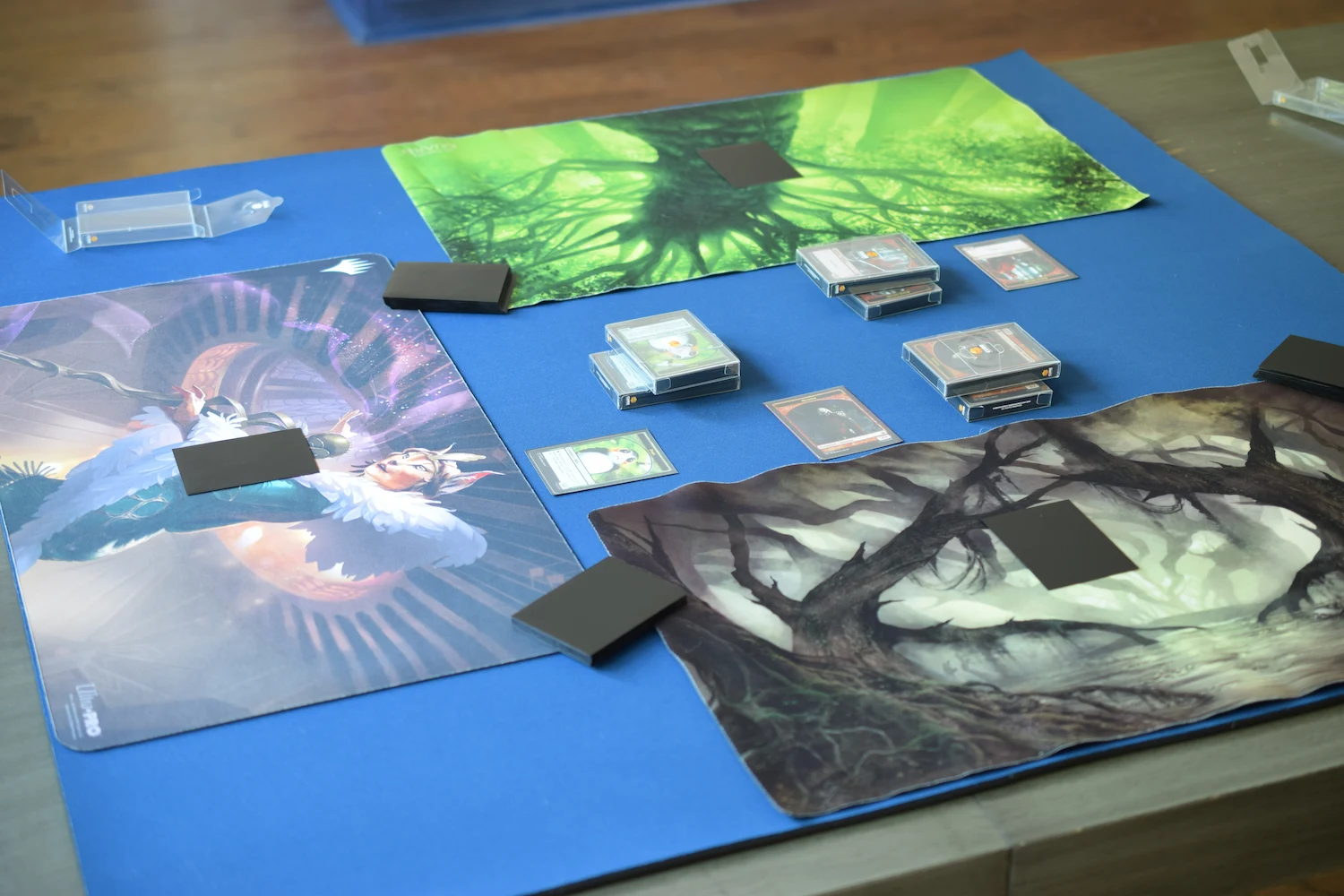
Setup Requirements
These are the steps that need to happen before you can start the draft:
- Gather enough cards for the desired card-pool size * the number of players (Usually 45 cards * 8 players = 360 cards).
- Shuffle the entire cube thoroughly!.
- Distribute randomized “packs” of cards to each player, face down (3 packs of 15 cards is most common, also 5 packs of 9 cards).
Why 3 packs of 15? is most common.
TL:DR; Use 3 packs of 15 cards For six or more players, otherwise use 5 packs of 9 cards to strike a good balance of luck of first picks, ability to read draft signals, and times a pack will wheel.
How To Draft
Follow these steps for a fair and engaging booster draft:
- Open a pack of cards distributed to you.
- Select 1 card from your pack to add to your draft pool face down.
- Pass the remaining unpicked cards to the player on your left.
- Pick-up the card pack passed to you from your right (Which will have 1 fewer card in it than your previous pack).
- Continue steps 2 through 4, selecting a single card from each pack and passing the remaining cards until all cards from the pack have been selected.
- Repeat this process for the remaining packs, switching the direction you pass for each new pack (Pack 1: Left, Pack 2: Right, Pack 3: Left, etc.).
By the end of a typical booster draft, each player will have a 45-card pool plus any additional basic lands from which to construct their minimum 40-card deck. All unused cards will form your sideboard for changes between games and for cards that care about things outside the game like Wish.
Zone Drafting Etiquette
“Zone Drafting” is a common etiquette rule for groups during a Booster Draft to prevent draft packs from getting out of order or having someone mistake a player’s draft pool with a passed pack.
- Each player has access to exactly three defined zones:
- Pick-up Zone (My Pick-up Zone is equal to my neighbor’s Passing Zone)
- In-Hand Zone (This is exclusive to me)
- Passing Zone (My Passing Zone is equal to my other neighbor’s Pick-up Zone)
- There can only ever be one pack per zone
- This could mean holding your current pack in your In-Hand Zone after drafting your card if there is still currently a pack in your Passing Zone.
Having mixups during a draft happens more often than it should and Zone drafting can help mitigate it from happening. It can slow down the draft overall but it can be worth the slow down to avoid a potential mixup. It can be particularly helpful for a table of varying experience levels as to not put added pressure on a slower drafter of the visual of seeing 3 or more packs starting to form a queue that they are moving slowly.
Competitive vs Casual Differences
Most Cube drafts are unlikely to implement most of the restrictions that are present for Professional REL (Rules Enforcement Level) but can be used to increase the competitive level of your drafts:
- Timed Picks: All players are given an exact amount of time to look at a given pack based on the number of cards and then all make their pick simultaneously (Like 40 seconds for packs with 15 to 14 cards all the way down to 5 seconds for packs of 4 to 2 cards).
- No Look Backs: You can’t review previous picks (your draft pool) mid-pack. You’re only allowed to look during a designated minute between packs.
- No Communicating: No signaling or talking of any kind (Looking at you “How is THIS still in the pack!?”).
- No Cross-Pod Play: The 8-person draft pod will only play matches against players in their same pod.
- The Draft portion is part of the test of skill of the event and playing cross pod removes any chance of players interacting during that portion. It’s almost like taking two separate games already in progress and making them swap opponents without resetting any players board state or life totals.
Variations
Here are some variations on booster draft for something slightly different or specific situations:
- Burn Draft: For smaller groups (2-6) that want to emulate the feeling of a full 8-person booster draft by “burning” cards from packs.
- Double Decker Draft: For smaller groups (Usually 4) with extra time that want to emulate the feeling of a full 8-person booster draft by playing two drafters at once and building two decks.
- Team Draft: Best for even numbers (Particularly 6) that mechanically is the same as booster draft but not allowing teammates to sit next to each other during the draft. (Post draft deck-building and matches are handled differently but the draft portion is almost the same.)